OpenClinica has seen a surge in usage over the past year, according to recent survey conducted by Akaza Research.
“Our annual survey of the OpenClinica community showed strong expansion in all key measurements of system usage,” said Cal Collins, Chief Executive Officer at Akaza. “In the past year we have seen doubling in the number of OpenClinica users and subjects, and a nearly 10-fold increase in regulatory submissions.”
The company reports that a reported 168,989 subjects have been involved in OpenClinica-powered clinical trials, a 224 percent increase from the prior year. In tandem, the company identified a 246 percent increase in the number of OpenClinica software users. The figure measures users working at the sponsor or CRO level and does not include users at clinical trial sites.
“Since these figures are based on a voluntary survey of the OpenClinica community, they are likely underestimates,” said Collins. “While it can be difficult to precisely measure the usage of freely distributed open source software, they provide a clear indication of the growth in OpenClinica adoption around the world,” he added.
The Professional Open Source Model
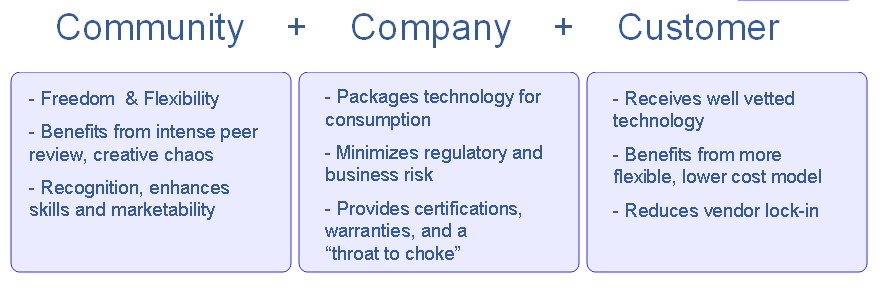
OpenClinica stands in stark contrast against the landscape of other EDC products that are provided under a closed source license. Akaza Research’s “professional open source” business model makes OpenClinica available in two editions. The OpenClinica Community Edition is freely available to use and modify, and may be downloaded form http://www.openclinica.org. The OpenClinica Enterprise Edition is a certified build of the open source technology commercially supported by Akaza Research. In many respects, the company’s business model is similar to that of RedHat (Linux), MySQL (database software), and other open source companies.
The OpenClinica rapidly growing open source community currently comprises over 10,500 users and developers, many of whom help review and adapt the open source software. Roughly 33 percent of OpenClinica users are located in North America, 30 percent in Europe, 14 percent in Asia, 9 percent in Africa, 7 percent in South America, and 7 percent in Australia. OpenClinica community members drive much of the product’s evolution, and in recent years have helped to usher the technology into a wide variety of clinical trial settings.
Worldwide Acceptance in Regulated Trials
The composition of the OpenClinica community is changing over time, with an increasing number of OpenClinica users representing commercial clinical trials. Currently, 55 percent of the OpenClinica community members identifies themselves as working in industry, with the remainder in academic or government settings.
According to Collins, “the robust overall growth is highlighted by an increasing proportion of OpenClinica users representing pharmaceutical, biotech, device, and other companies. We saw a 975 percent increase in OpenClinica-powered trials used in regulatory submissions in the past year, and in the next 12 months OpenClinica adopters expect to increase this number by another 200 percent. This is consistent with our OpenClinica Enterprise Edition customer growth, where a majority of new customers are from industry.”
For more information about OpenClinica see the OpenClinica website.
Filed under: Case Studies | Tagged: Akaza Research, clinical data management software, clinical trials software, commercial open source, community, electronic data capture, OpenClinica adoption, OpenClinica Enterprise, OpenClinica usage, OpenClinica users, professional open source | 1 Comment »


The Evolution of Electronic Data Capture
OpenClinica was recently featured in an article in Genetic Engineering and Biotechnology News titled “Commandeering Data with EDC Systems,” written by Dr. James Netterwald. The article briefly recounts the early days of clinical trial Electronic Data Capture (EDC). But how far have we come? Dr. Netterwald’s title (perhaps unintentionally) conjures up images of struggle and strife, which may be perhaps more a more apropos description of the journey of Electronic Data Capture than it may first appear.
As an industry, it’s taken us a good 20 years to get to where we are, and to be plain, it’s been a slow start. (In my own defense, I, and my company Akaza Research, have only been a party to the industry for the last 5 of those 20 years.) Climbing the evolutionary ladder from shipping laptops to sites to keying data into electronic case report forms is certainly progress by any measure. However, while the days of mailing tapes and disks are over, the days of real electronic data capture are yet to come. Today, most experts agree that somewhere between only one-half and two-thirds of all new clinical trials use EDC software, an of this only a very small fraction are “e-source,” defined as collecting data in electronic form at its source as opposed to keying it in from some other source. In some ways it is ironic that cutting-edge biopharmaceutical technologies are developed themselves with technologies that are, relatively speaking, much further down the technology food chain.
Notwithstanding, there are some enterprising few who have pushed the pace towards true EDC. Spaulding Clinical, a large phase 1 unit in West Bend, Wisconsin has developed a system that automatically captures ECG data from their facility’s patients and directly populates the clinical trial database with these data. A patient wears the ECG device and the data are transmitted wirelessly to the EDC system. However, this slick and highly productive solution was not developed by either the ECG vendor or the EDC vendor. It was developed by hand by one of Spaulding’s own software developers.
Why isn’t this type of solution more commonplace in clinical trials? What prevents the industry from making the most of today’s information technology? With the strong incentives currently in place to make research more efficient, our field could certainly benefit from some more forward thinking.
- Ben Baumann
Filed under: Industry Commentary | Tagged: Akaza Research, case report form, clinical trials, clinical trials software, CRF, e-source, ECG, EDC, electronic data capture, GEN, Genetic Engineering and Biotechnology News, James Netterwald, Spaulding Clinical | 1 Comment »